Official contradiction
OFAC licenses and GAO findings diverge on how U.S. sanctions are actually enforced
Public Government Accountability Office work has repeatedly described gaps between Treasury licensing practice and measurable enforcement of economic sanctions. The record shows officials defending case-by-case licenses while auditors cite incomplete data, delayed reviews, and uneven follow-through.
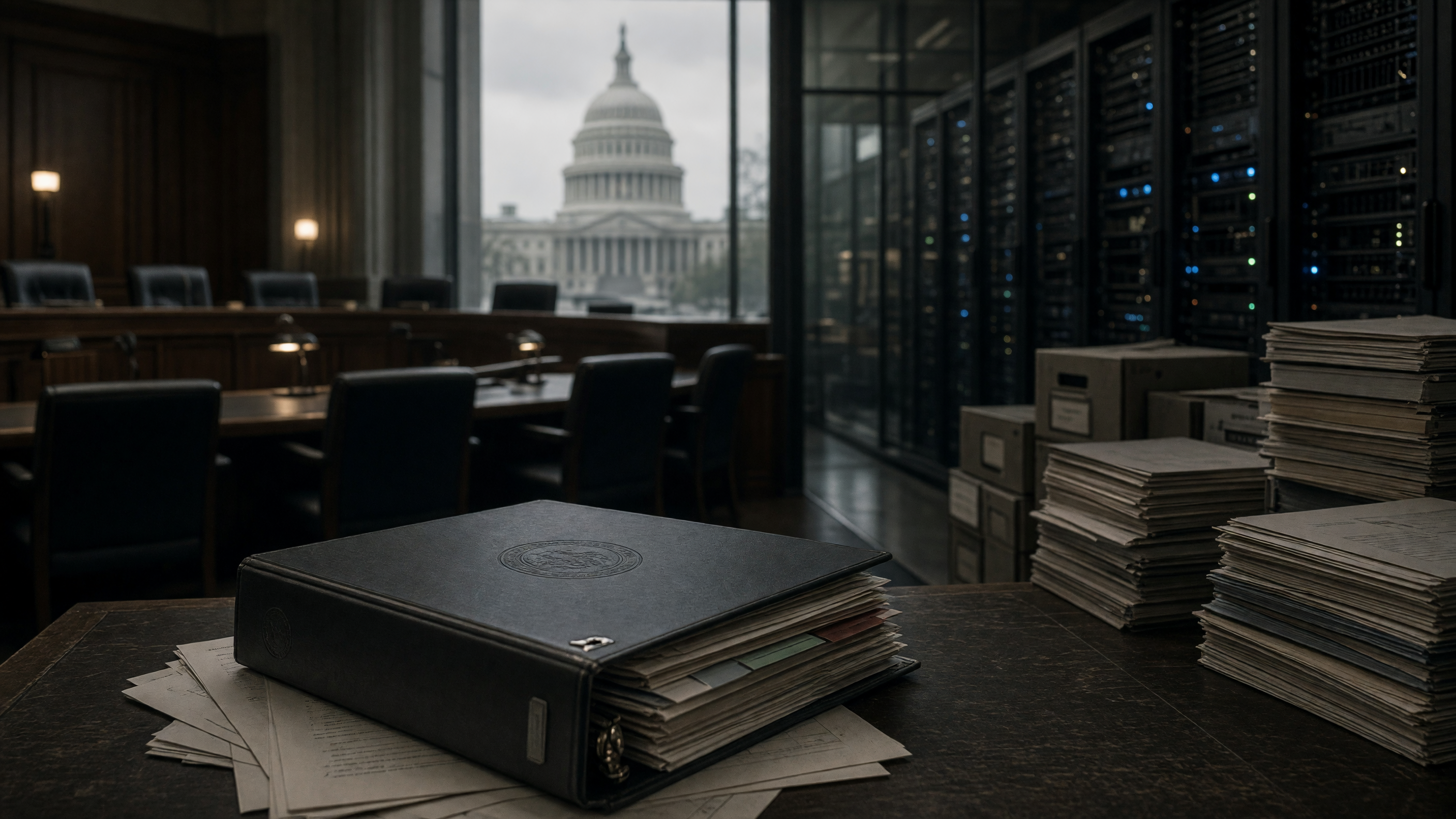
The Office of Foreign Assets Control at the Treasury Department issues licenses that authorize transactions otherwise barred by U.S. sanctions programs. Those decisions sit beside a separate public record: Government Accountability Office reports that examine whether sanctions are enforced as written, whether agencies can measure results, and whether licensing and compliance systems keep pace with the statutes Congress has enacted.
According to Treasury’s public descriptions, OFAC administers economic and trade sanctions based on foreign policy and national security goals. Licenses—general licenses published in the Federal Register and specific licenses granted to named parties—are the principal legal pathway for humanitarian trade, legal services, certain financial wind-downs, and other exceptions. Officials have long said that licensing is a tool of calibrated pressure, not a loophole, and that each application is reviewed against the relevant executive orders and statutes.
GAO’s published work on sanctions implementation has used more cautious language about outcomes. Across multiple reports over the past decade, the accountability office has alleged that agencies, including Treasury, often lack complete, comparable data on how licenses are used after they are granted, how frequently licensed activity is audited, and whether blocked-property and reporting systems capture the full universe of potentially prohibited dealings. The reports do not claim that every license is improper. They describe measurement problems, interagency coordination shortfalls, and enforcement caseloads that do not always map cleanly onto the volume of licensed exceptions.
Public dockets and Federal Register notices show OFAC routinely issuing general licenses for food, medicine, agricultural commodities, and certain NGO activity in sanctioned jurisdictions. Specific licenses, which are not always published in full, appear in redacted form in litigation and in FOIA productions. The record shows applicants ranging from banks and energy firms to aid groups and law firms. Treasury has said, in public testimony and fact sheets, that humanitarian authorizations are designed to reduce civilian harm while preserving the core of a sanctions program. GAO, in turn, has reported that humanitarian channels can be slow, that banks remain risk-averse even when a license exists, and that Treasury and other agencies have not always tracked whether licensed goods actually reach intended recipients.
Enforcement is a separate ledger. OFAC civil penalties, published on Treasury’s website, document settlements with financial institutions, shipping companies, and others for alleged violations. Those notices typically describe apparent violations, the absence or presence of a license, and mitigating factors such as voluntary self-disclosure. GAO has noted that penalty data, while public, do not by themselves prove that the licensing system is either tight or leaky. Auditors have pointed to incomplete information on how often OFAC refers matters to the Justice Department, how long license applications wait in queue, and whether post-license monitoring is systematic or complaint-driven.
Budget documents submitted to Congress list OFAC among Treasury’s Office of Terrorism and Financial Intelligence components. Those justifications describe staffing for licensing, compliance outreach, and investigations. Inspectors general and GAO have, in public products, questioned whether headcount and information-technology systems match the growth in sanctions designations since the early 2000s. Officials have answered that designations and licenses both increased because Congress and successive administrations expanded the statute book—Iran, Russia, Venezuela, North Korea, cyber-related authorities, and others—and that resources follow statutory mandates.
The tension in the public record is not a single leaked memo. It is the contrast between OFAC’s case-by-case legal product and GAO’s program-evaluation product. Licensing decisions are individualized: an applicant, a set of facts, a legal analysis, a grant or denial. GAO reports ask whether the system as a whole can show that sanctions change behavior, that licensed exceptions do not swallow the rule, and that enforcement is evenhanded across sectors. Where GAO has recommended better metrics, Treasury has, in published agency comments, generally concurred in part, citing operational constraints, classified intelligence equities, and the need to protect ongoing investigations.
Courts have added another layer. Challenges to designations and to license denials appear in the D.C. Circuit and in district courts. Opinions in those cases, which are public, often recite OFAC’s administrative record and the deferential standard of review. They do not substitute for GAO’s government-wide look at enforcement statistics. They do show that licensing is litigated as an administrative-law question: whether the agency articulated a reasoned basis, considered humanitarian factors where required, and followed its own regulations.
Money in the system is also a matter of public filing. Banks’ BSA/AML programs, described in consent orders and in Treasury’s Financial Crimes Enforcement Network guidance, treat OFAC screening as a core control. When a general license exists, compliance officers still demand paperwork. GAO has reported that this private-sector caution can blunt the effect of licenses Congress and Treasury intended to be usable. Treasury has publicly urged financial institutions to process authorized humanitarian transactions and has issued FAQs to that end. The accountability office has replied, in effect, that guidance without measurable follow-through leaves the same gap it identified in earlier reviews.
None of the open sources claims a single secret list of improper licenses. What they do show is a standing institutional mismatch: OFAC produces legal instruments; GAO asks whether those instruments, plus designations and penalties, add up to an enforceable policy. Until the data systems the auditors have recommended are built and reported in comparable form, the public comparison will remain what it is now—an argument conducted in licenses, settlement notices, budget justifications, and GAO chapters, not in a unified scorecard of sanctions success.