Capture
PDUFA docket filings and CDER ethics waivers sit on parallel tracks
Public user-fee records and advisory-committee conflict waivers describe two sides of the same review machinery. The record shows industry money and recusal exceptions moving through separate but related FDA processes.
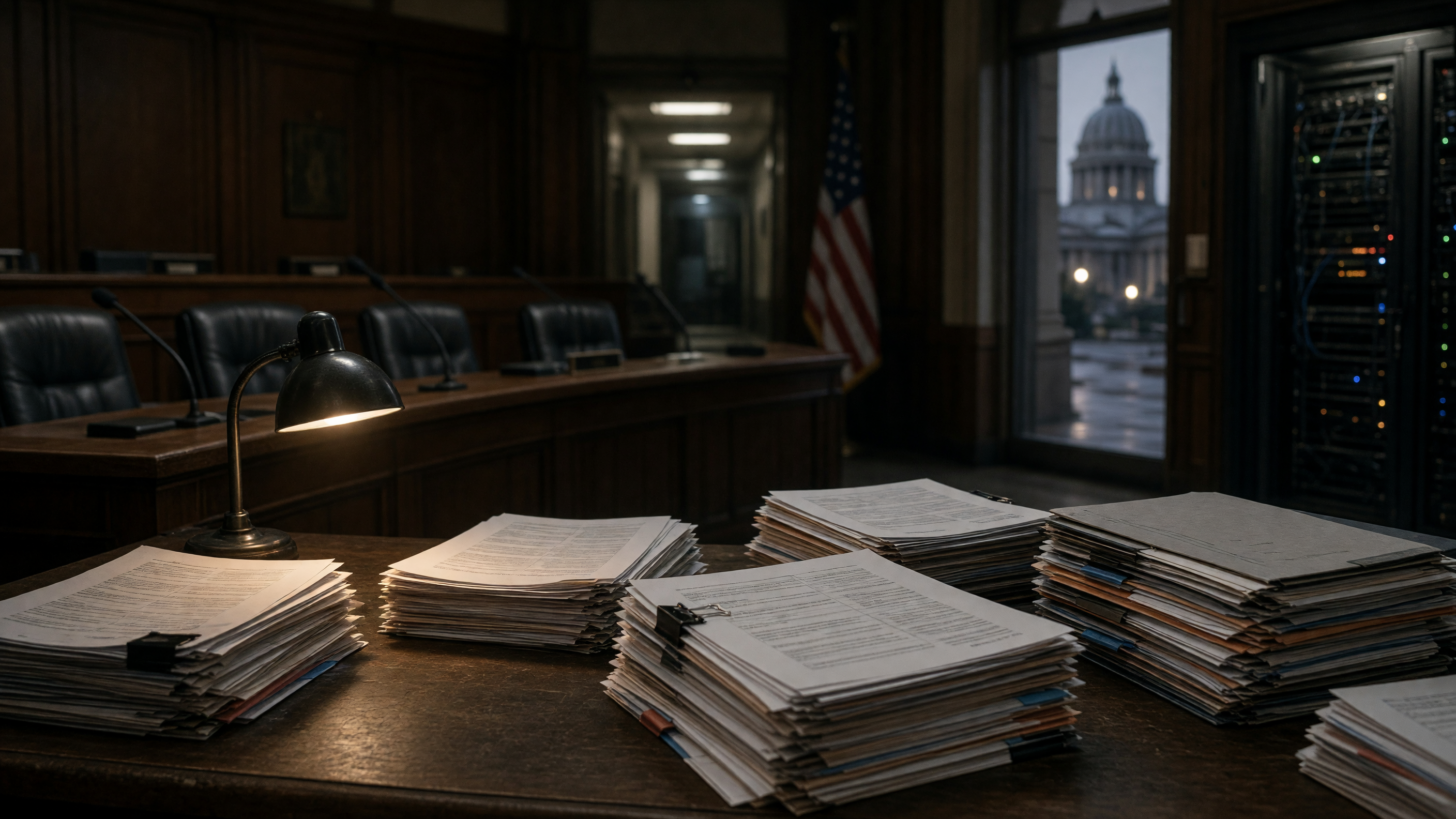
The Prescription Drug User Fee Act, first enacted in 1992 and reauthorized on a five-year cycle, authorizes the Food and Drug Administration to collect fees from companies that submit new-drug applications and related filings. Those fees, according to agency budget justifications submitted to Congress, now cover a large share of the Center for Drug Evaluation and Research’s review staff and related operations.
The public PDUFA docket, maintained on Regulations.gov, contains the statutory reauthorization proposals, industry comments, patient-group submissions, and the agency’s own performance goals. The most recent cycle produced a published commitment letter that sets review timelines, meeting types, and reporting metrics. Officials said the fees are intended to make reviews more predictable without altering statutory safety and effectiveness standards.
Separately, CDER convenes advisory committees of outside experts to discuss selected applications, safety questions, and policy issues. Federal ethics rules require those members to disclose financial interests. When a conflict exists, the agency may grant a waiver under 18 U.S.C. § 208(b)(3) if it determines the need for the individual’s expertise outweighs the potential for a conflict of interest.
The record shows those waivers are posted, often shortly before a meeting, with a brief description of the interest and the agency’s finding. They are not filed in the same electronic docket as the PDUFA reauthorization comments. One process is a multi-year legislative and comment cycle; the other is a meeting-by-meeting ethics determination.
Inspectors general and congressional committees have repeatedly examined both streams. Government Accountability Office reports have described the growth of user-fee funding as a share of CDER’s budget and have noted the continued use of conflict waivers for advisory-committee members. The agency’s own annual reports list the number of meetings held and, in aggregate, the waivers granted.
Industry trade associations file lengthy comments in the PDUFA docket arguing for shorter review clocks, more Type B and Type C meetings, and expanded use of real-world evidence. Patient and consumer groups file comments seeking stronger post-market requirements and more public access to review documents. The docket is the formal place those positions enter the administrative record.
Advisory-committee ethics paperwork is narrower. A typical waiver recites that a member or an immediate family member holds stock, consulting income, or a research grant from a sponsor whose product is under discussion, or from a competitor. The agency then states that the member’s specialized knowledge is essential and that the interest is not so substantial as to be likely to affect the integrity of the member’s services.
Officials said the two systems serve different legal purposes. User fees are authorized by statute and subject to appropriations-committee oversight and periodic reauthorization. Ethics waivers implement criminal conflict-of-interest law and Office of Government Ethics regulations. Nothing in the public record merges the two into a single decision document.
Critics of the user-fee model, including some former agency officials speaking in published interviews and academic papers, have argued that fee dependence can create an appearance that industry is a paying customer of the review process. The agency’s public position, restated in successive PDUFA commitment letters, is that fees buy additional staff and meetings, not a changed standard of evidence.
On the waiver side, watchdog groups have used Freedom of Information Act releases and posted waiver letters to argue that recusals are too rare and that financial ties remain common among committee members. The agency’s published criteria emphasize the scarcity of certain subspecialties and the need for experienced reviewers of complex trial designs.
Dockets and waiver letters are both public, yet they are not cross-indexed. A researcher seeking to compare a company’s PDUFA-related comments with the same company’s appearance in a later advisory-committee waiver must assemble the files from different agency pages and meeting archives. The administrative record does not, on its face, require that comparison.
Reauthorization hearings before House and Senate committees routinely include testimony on fee levels, hiring, and review performance. Ethics waivers appear less often in those hearings; they surface more frequently in letters from members of Congress after a high-profile committee vote or a subsequent approval.
The Federal Register notices that announce advisory-committee meetings list the products or questions under discussion and, when applicable, note that waivers have been granted. They do not reproduce the full waiver text. That text is posted on the FDA’s advisory-committee web pages, typically as a PDF.
Budget tables in the FDA’s congressional justifications show user fees as a distinct funding source alongside budget authority. They do not itemize ethics-office staff or the cost of processing waivers. Those functions sit inside the broader human-resources and ethics apparatus of the Department of Health and Human Services.
Nothing in the published dockets or waiver files constitutes a classified program. Both are ordinary administrative records. What they do not contain is a single narrative that treats fee-funded review capacity and conflict waivers as one integrated policy choice. Each file set remains in its own lane.
Subsequent PDUFA cycles will again open a docket for comments on goals and fee structure. Advisory committees will continue to meet, and waivers will continue to be issued under the same statutory test. The public record will again show two parallel paper trails: one about money and timelines, the other about which experts may sit in the room.
The two trails describe the same center, CDER, and the same statutory mission. They are not, according to the files themselves, a single docket. Readers who want the relationship between industry fees and committee composition must still read both.